Christmas in Denmark, Sweden and Norway is built around candlelight, home cooking and time together. Many of the traditions go back hundreds of years, and a surprising number are easy to bring into a British home. This guide explains the Danish and Scandinavian Christmas traditions we love most, with ideas for trying them yourself.
Julaften: Christmas Eve is the main event
In Denmark the big celebration is on 24 December, known as juleaften. Families usually eat a long, festive dinner in the evening and open presents afterwards. Sweden and Norway also celebrate on Christmas Eve, so Christmas Day itself tends to be a quiet, restful one.
A traditional Danish Christmas dinner is roast pork with crackling (flæskesteg) or roast duck, with caramelised potatoes, red cabbage and plenty of gravy. If you’d like to build your own Nordic table, see our Scandi Christmas Shop.
Risalamande and the hidden almond
Dessert is risalamande, a cold rice pudding mixed with whipped cream and chopped almonds and served with warm cherry sauce. One whole almond is hidden in the bowl, and whoever finds it wins a small gift, the mandelgave. Children (and plenty of adults) have been known to hide the almond in their cheek and keep quiet so the game goes on.
Dancing around the Christmas tree
Before the presents are opened, Danish families often hold hands and walk around the tree singing carols and Christmas songs. The tree is usually decorated with paper hearts, stars, small flags, and paper cones filled with sweets, and many families still light it with real candles on Christmas Eve, with a bucket of water close by.
Woven paper hearts (julehjerter)
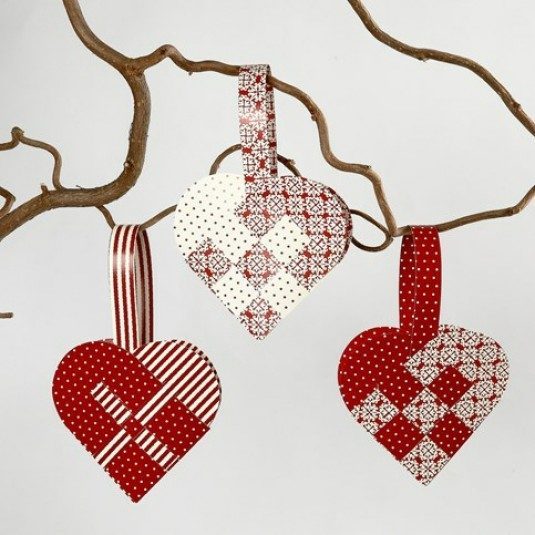
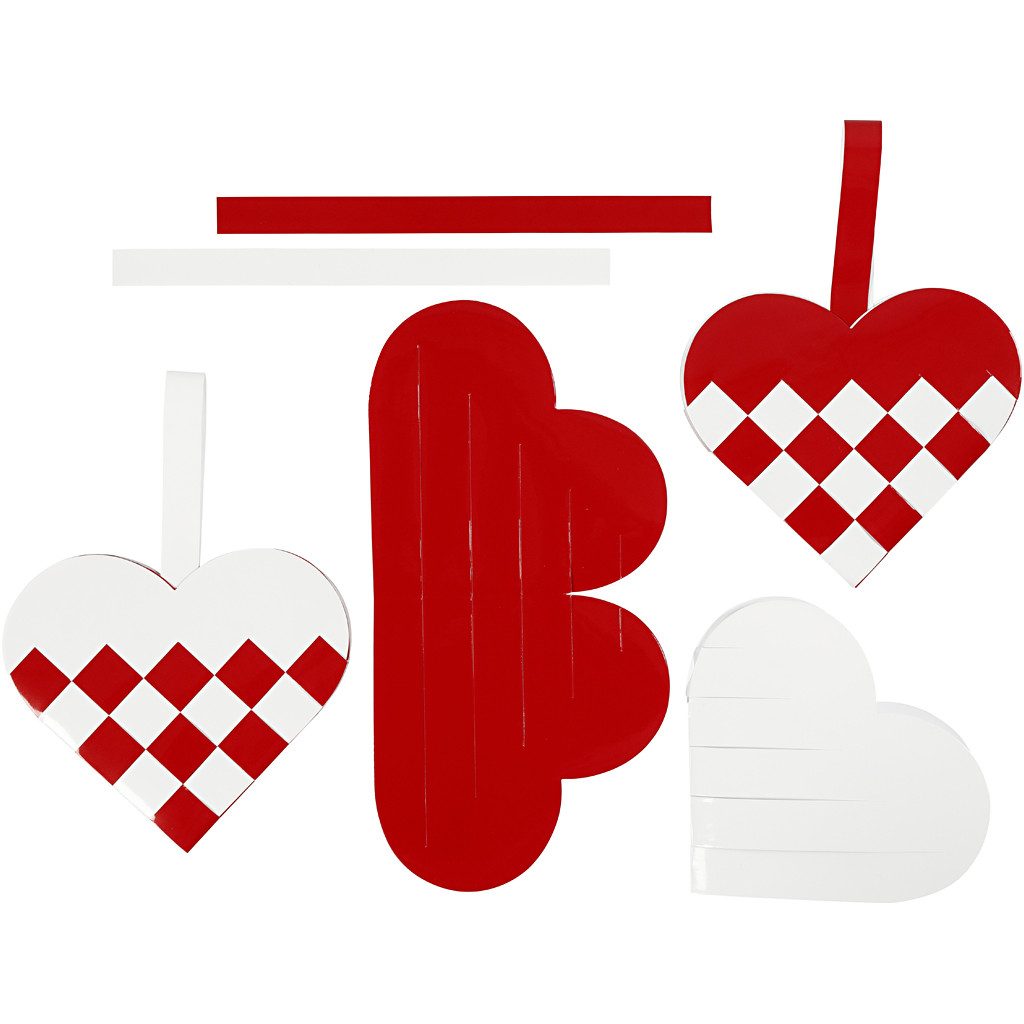
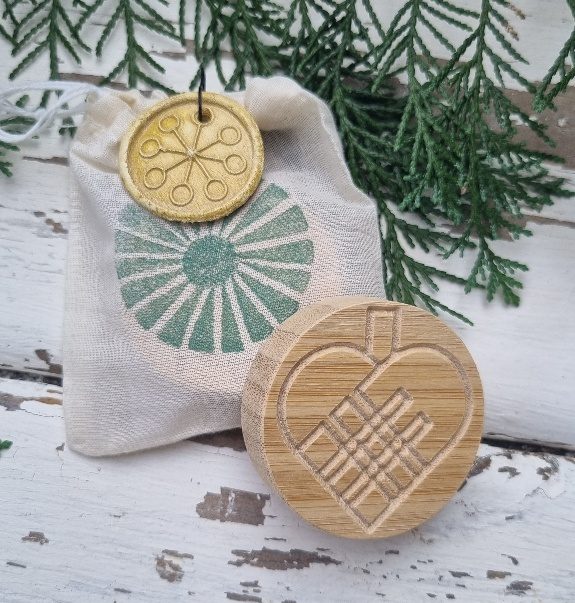
Woven paper hearts are the best-known Danish Christmas decoration. Two pieces of paper, usually red and white, are cut and woven together to make a small basket that can be hung on the tree and filled with treats. The first known woven heart is said to have been made by Hans Christian Andersen in 1860. Making them is a family activity in many Danish homes, and it works well with children. Our free printable Danish kræmmerhuse paper cones are another easy place to start.
£12.95
£5.49
£5.75
£4.99
The nisse and his Christmas porridge
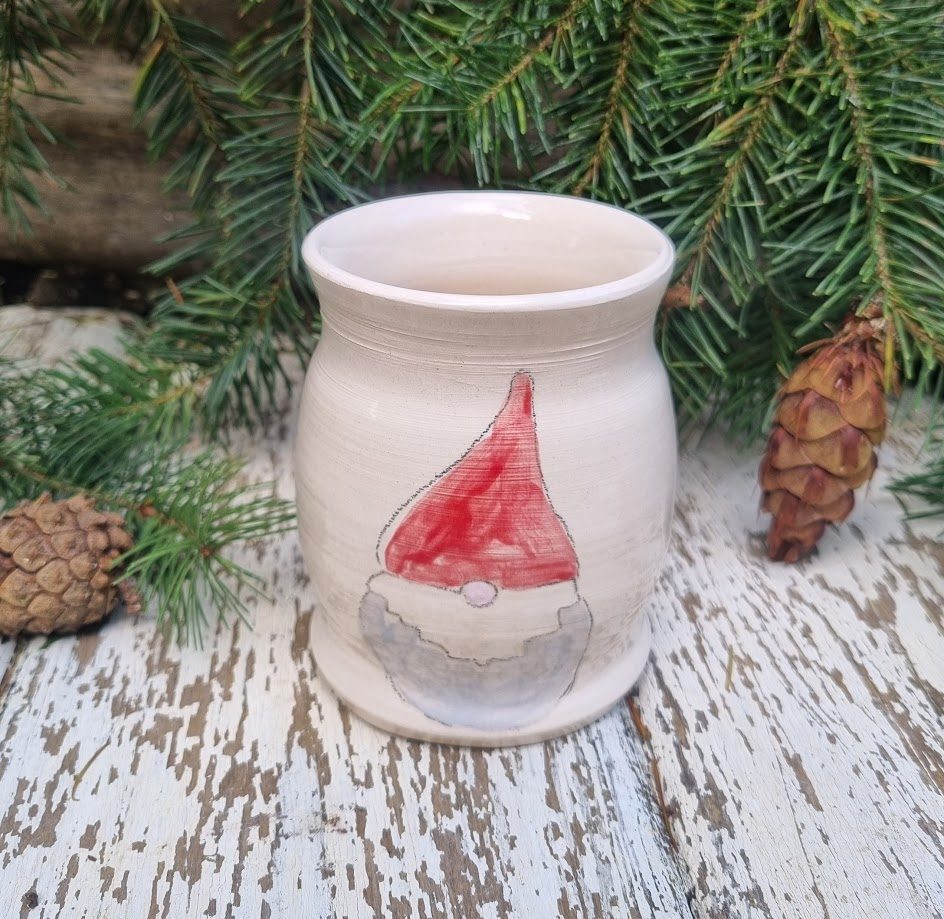
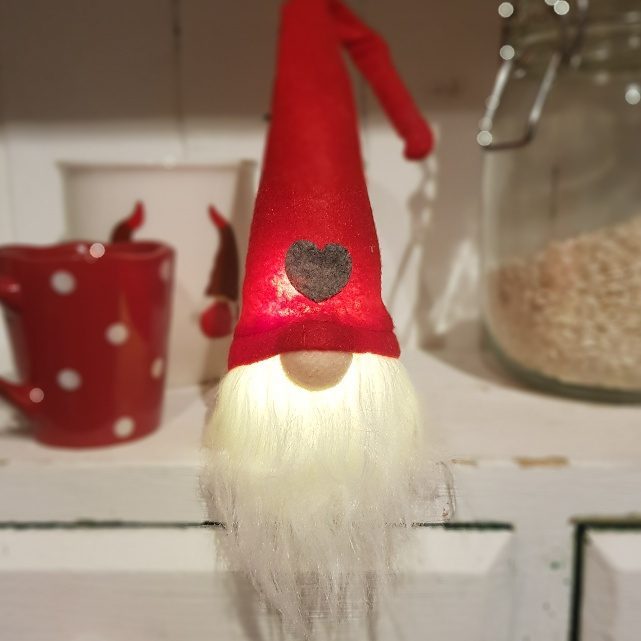
The nisse (a tomte in Sweden) is a small, bearded household gnome who is said to look after the farm and the family. On Christmas Eve, Danish children traditionally leave a bowl of rice porridge with a knob of butter out for him, and it’s said that a forgotten nisse plays tricks. You can see how to make a simple one in our guide to making Nordic string gnomes.
Advent: candles, wreaths and calendars
Advent is the lead-up to Christmas, and candlelight is at the heart of it. Many families light an advent wreath with four candles on the four Sundays before Christmas, one more each week. In Denmark there is also the kalenderlys, a candle marked with the days of December that is lit and burned down a little each day until Christmas Eve.
Gløgg, æbleskiver and Christmas baking
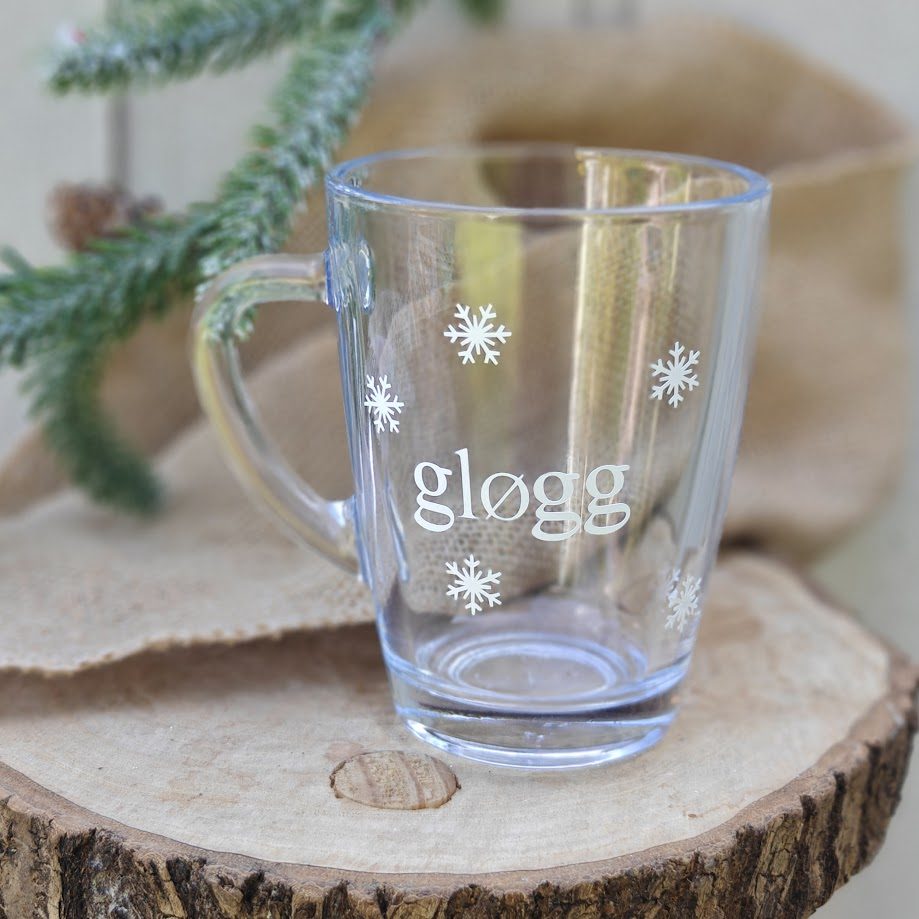
December in Denmark means warming mulled wine (gløgg) served with raisins and almonds, and æbleskiver, round pancake-like puffs dusted with icing sugar and served with jam. Danish Christmas biscuits include vanilla rings (vaniljekranse), pebernødder (small spiced biscuits) and brunkager. See our Danish biscuit recipes, such as finskbrød, for an easy start.
£7.95
£6.49
£5.25
£3.95
£3.95
£5.99
Julefrokost: the Danish Christmas lunch
Many Danes also enjoy a julefrokost (Christmas lunch) with friends, family or colleagues in the weeks before Christmas. It’s a long, relaxed meal with several courses, including pickled herring, liver pâté, roast pork and rye bread, often with a little schnapps. It’s more of a party than a quiet family meal.
Sweden and Norway: Lucia and gingerbread
In Sweden, Saint Lucia’s Day on 13 December kicks off the season. Children dress in white with candles and sing in processions, and families eat saffron buns called lussekatter. In Norway, gingerbread (pepperkaker) is baked in huge quantities, and in December Norwegians enjoy julebord, festive buffet-style Christmas meals with friends and colleagues.
Bringing Scandinavian Christmas traditions home
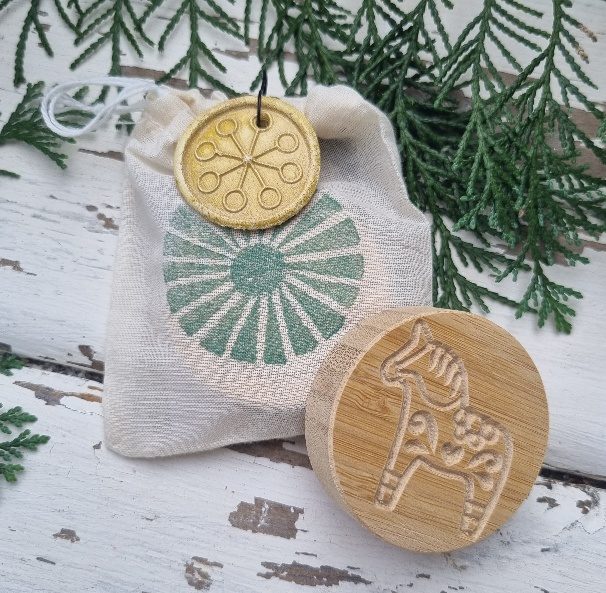
You don’t need to do everything. Choose one or two traditions that suit your family, such as an advent candle, a hidden almond in the rice pudding or woven hearts on the tree, and build up from there. Cookie cutters, stamps and little decorations make it easy to start your own.
£4.49
£8.95
£8.95

£9.95
Scandinavian Christmas traditions FAQs
When do Danes celebrate Christmas?
The main celebration is on the evening of 24 December (Christmas Eve), when families eat dinner, dance around the tree and open presents.
What is risalamande?
It’s the traditional Danish Christmas dessert: cold rice pudding with whipped cream and chopped almonds, served with warm cherry sauce. A whole almond is hidden in it and the finder wins a small prize.
What is a nisse?
A nisse is a small household gnome in Danish and Norwegian folklore (a tomte in Sweden). Families traditionally leave him a bowl of rice porridge with butter on Christmas Eve.
What do Scandinavians put on their Christmas tree?
Traditional decorations include woven paper hearts, paper stars, small flags, straw ornaments, nisse figures and glass baubles, often with warm white lights or candles.
Find Scandinavian Christmas gifts and decorations
For more ideas, read our guide to Scandi Christmas decorations and our Scandinavian Christmas gift guide, or browse the Scandi Christmas Shop. UK delivery is free over £30.