
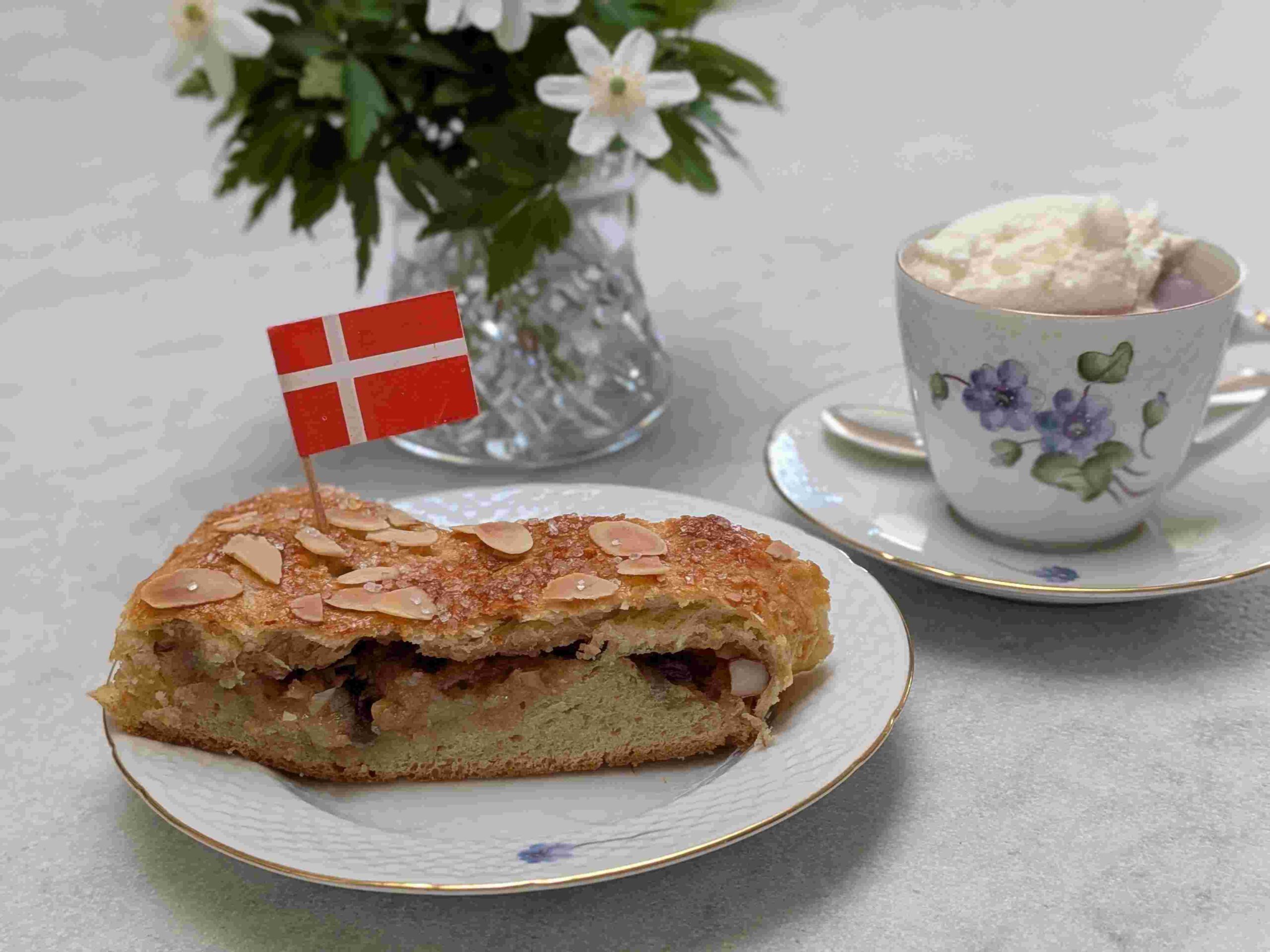
If you can’t make it to Danish Fair this year, you can still bring a little piece of Denmark into your own kitchen by making one of the most beloved Danish cakes: the traditional Danish kringle.
If you’ve ever walked past a traditional bakery in Denmark, you’ve probably noticed the golden pretzel sign hanging outside. This iconic symbol is the kringle – the classic emblem of Danish bakeries.
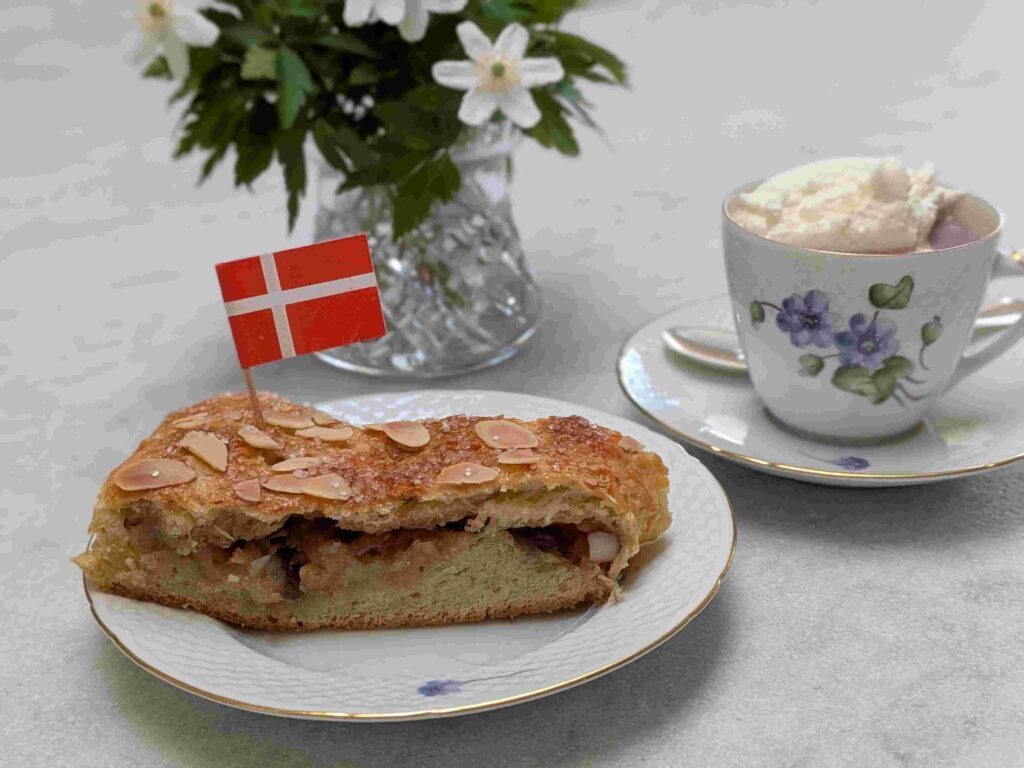
Despite the familiar shape, Danish kringle isn’t quite the same as the hard pretzels you might know. In Denmark, kringle refers to the shape rather than the dough itself and the word comes from the Old Norse kringla, meaning “ring” or “circle”. While it was originally shaped like a pretzel, modern versions are often baked as rectangles, horseshoes or rings for practicality.
Kringle has been part of Danish baking culture for centuries and remains a firm favourite today. It can be made with either soft yeast dough or flaky pastry, typically filled with remonce (a buttery sugar mixture), marzipan, raisins and nuts and topped with coarse sugar or icing.
Kringle is often served for birthdays and celebrations and decorated with small Danish flags – a familiar sight at festive tables across Denmark.
Velbekomme!
Traditional Danish Kringle Pastry (Gammeldags Kringle)
Ingredients
Dough
- 50 g fresh yeast or use this conversion table for active dry yeast and instant quick yeast
- I used fresh yeast which is the most accessible yeast variant in Denmark
- 200 ml water lukewarm
- 3 eggs medium–large, room temperature
- 50 g sugar
- Pinch of fine salt
- 600 g all-purpose flour preferably >12% protein
- 300 g baking margarine cubed, room temperature
- Margarine has a higher melting point which helps create a lighter, more tender crumb.
Filling (Remonce)
- 150 g baking margarine or butter room temperature
- 150 g sugar
- 1 tsp ground cardamom
- 1 tsp vanilla sugar or ½ vanilla pod / ½ tsp vanilla extract
- 1 ½ tbsp amaretto liqueur / almond essence
- 100 g marzipan grated
- 75 g raisins
- 75 g almonds toasted and chopped
- 120 g makroner amaretti style biscuits – such as these, crushed
For brushing and topping
- 1 egg beaten
- Pearl sugar
- Almond or hazelnut flakes
Instructions
- Make the dough
- Dissolve the fresh yeast in the lukewarm water or follow the manufacturer’s instructions for other yeast types. Add the eggs, sugar and salt, then mix in half the flour.
- Work the soft margarine into the dough (a stand mixer with a paddle attachment is ideal here), then switch to a dough hook and incorporate the remaining flour.
- Knead for about 15 minutes at medium-high speed, until the dough becomes smooth, glossy and pliable. A little stickiness is normal and is better resolved through kneading a few more minutes than by adding more flour. The dough is ready when a small piece can be stretched thin enough to let light through without tearing – the classic “windowpane test.”
- Cover with a tea towel and leave to rise in a warm place for approximately 45 minutes, or until doubled in size.
- Prepare the filling
- Beat together the margarine or butter, sugar, cardamom, vanilla and almond flavouring until smooth. Fold in the grated marzipan. Toast the almonds in a dry pan, chop roughly, and crush the biscuits – a freezer bag and a rolling pin make easy work of this.
- Shape the kringle
- Lightly flour your work surface and gently knead the risen dough. Transfer to a baking tray lined with parchment paper and press or roll it out into a rectangle of approximately 40 × 70cm.
- Spread the filling along the horizontal centre of the dough, all the way to the ends. Scatter over the raisins, chopped almonds and crushed makroner. Fold the bottom edge up over the filling, then fold the top edge down to enclose it entirely, tucking in the ends to seal.
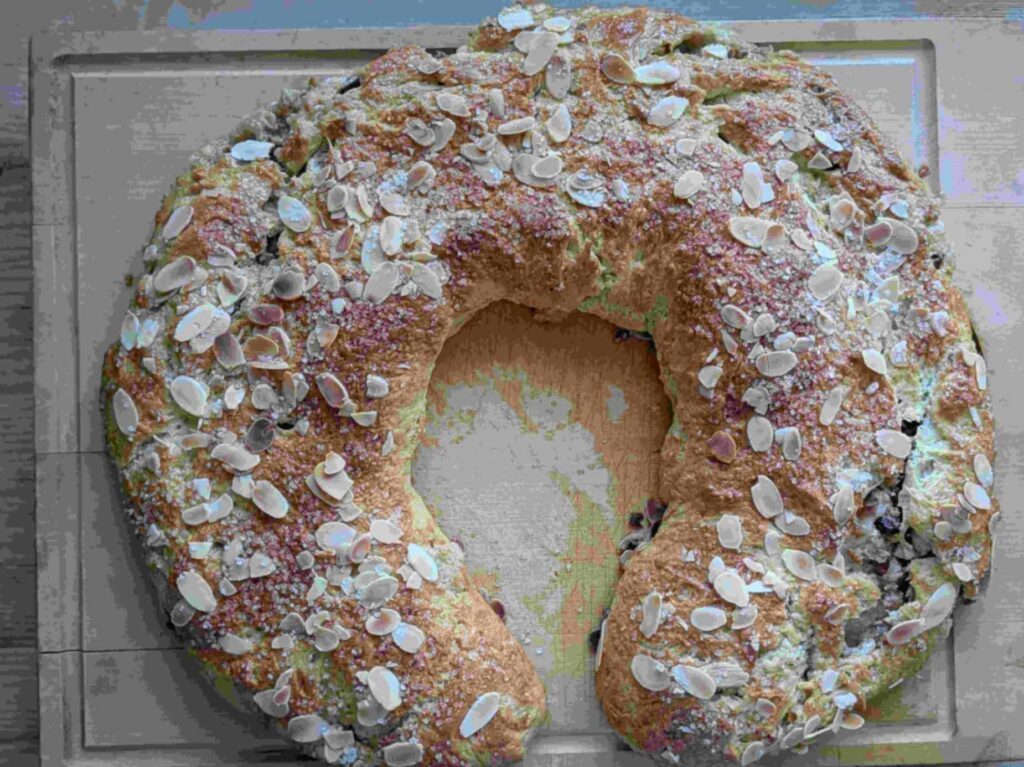
- Shape into a rectangle, horseshoe, ring or a traditional pretzel form. Ensure the seams are well sealed so the filling stays put during baking.
- Second rise
- Cover with a tea towel and leave to prove for a further 30 minutes in a warm place. Meanwhile, preheat the oven to 220°C (conventional, not fan).
- Bake
- Brush with beaten egg and scatter pearl sugar and almond or hazelnut flakes over the surface. Place in the lower third of the oven and bake for 5 minutes, then reduce the temperature to 200°C and continue baking for a further 10–20 minutes until golden brown.
- Cool
- Remove from the oven and leave to cool under a clean tea towel – this keeps the crust soft and the crumb moist.
- Notes
- Like most yeast-based bakes, kringle is at its best on the day it’s made.
- Kringle freezes well. To serve later, defrost at room temperature for a few hours and warm through in the oven at 200°C.