If you’ve ever wondered why Danish Christmas looks so cosy, the answer is simple: they take it seriously, and they take it slowly. Candles are lit from the first of December, there’s a hidden almond in the pudding, and there might even be a little gnome in the attic waiting for his porridge. We’ve put together our favourite Danish and Scandinavian Christmas traditions, with the stories behind them and some easy ways to borrow them for your own home.
Where does “jul” come from?
In Denmark, Sweden and Norway Christmas is called jul (you’ll see it on every card: Glædelig jul in Danish, God jul in Swedish and Norwegian). The word goes back to Yule, an old Norse midwinter feast held in the darkest part of the year. People lit fires, feasted and gathered together to get through the long, dark winter. That idea is still at the heart of a Scandinavian Christmas: light, food and company, to make the dark days cosy. It’s the same spirit as hygge, really.
Julaften: Christmas Eve is the big night
This is the first thing that surprises British visitors: in Scandinavia the main event is Christmas Eve, 24 December (juleaften in Denmark, julafton in Sweden, julaften in Norway). Families have a long, leisurely dinner in the evening, then presents are opened afterwards. Christmas Day itself is for relaxing, seeing family and eating leftovers.
A classic Danish Christmas dinner is roast pork with crackling (flæskesteg), or roast duck, served with caramelised potatoes, red cabbage and lots of gravy. It’s rich and it’s very much a feast. If you’d like to set your own Nordic table, browse the Scandi Christmas Shop for candles, holders and decorations.

Risalamande and the hidden almond
Dessert is where it gets fun. Risalamande is a cold rice pudding mixed with whipped cream and chopped almonds, served with warm cherry sauce. One whole almond is hidden in the big bowl, and whoever finds it wins a small gift, the mandelgave. It’s a bit of a game: the winner is supposed to keep quiet about finding it, so everyone keeps eating hoping to be the lucky one. Children (and plenty of adults) have been known to hide the almond in their cheek to keep the game going.
Little Christmas Eve and the tree
In many Danish homes the tree goes up and is decorated on 23 December, known as lillejuleaften (little Christmas Eve), so it’s ready for the big night. Danish trees are usually decorated with paper hearts, stars, tiny flags, little paper cones filled with sweets and glass baubles. Many families still light the tree with real candles on Christmas Eve (with a bucket of water close by, just in case).
Then comes the best bit: before any presents are opened, everyone holds hands and walks round and round the tree singing carols. Favourites include Højt fra træets grønne top and Et barn er født i Betlehem. It can go on for a while, which is half the charm. If you have children, it’s a great way to get them to calm down before the present-opening starts.
Julehjerter: the famous woven paper hearts
If there is one single Danish Christmas decoration, it’s the woven paper heart (julehjerte). Two pieces of paper, usually one red and one white, are cut and woven together to make a heart-shaped basket that you hang on the tree and fill with sweets or nuts. The first one is said to have been made by Hans Christian Andersen in 1860. Making them is a proper family activity in Denmark, and it’s easier than it looks once you’ve done your first one.
Also look out for the kræmmerhuse, little paper cones that hang on the tree. We have a free printable Danish kræmmerhuse to colour in, which is a good one for children.

The nisse and his bowl of porridge
Every Danish farm is said to have a nisse (a tomte in Sweden), a small, bearded household gnome in a pointy red hat who lives in the barn or attic and watches over the family and the animals. He likes to be treated well, and on Christmas Eve children traditionally leave him a bowl of rice porridge (risengrød) with a knob of butter on top. If you forget, he plays tricks on the household. That’s why you’ll see nisse everywhere in Denmark in December: on windowsills, in shop windows, and perching on shelves.
Fun fact: Santa Claus in Denmark is a different character. He’s called Julemanden, and he’s traditionally said to live in Greenland. Want to make your own nisse? Our guide to making Nordic string gnomes is an easy craft for a cosy afternoon.


Advent: candles, calendars and a countdown
December in Scandinavia is all about the countdown. Many families have an advent wreath with four candles, lighting one more each Sunday before Christmas. In Denmark there’s also the kalenderlys, a long candle marked with the days of December. You light it each evening and let it burn down to the next number, so you can see Christmas getting closer.
Danish children also have a julekalender on TV, a daily story shown through December, and many have a pakkekalender, a calendar of 24 tiny gifts to open one by one. It’s no wonder Christmas feels like it lasts all month.

Straw, goats and all things golden
Straw is a very Nordic Christmas material. Straw stars, hearts and little figures are hung on the tree or in windows, a link back to the harvest and the old midwinter traditions. In Sweden, the julbock (Yule goat) is made of straw too, and every Advent the town of Gävle builds a giant straw goat in the town square. It’s famous partly because it has been set on fire more times than anyone would like to admit!

Gløgg, æbleskiver and Christmas baking
If you only try one Danish Christmas treat, make it æbleskiver: round, light pancake-like puffs cooked in a special pan, dusted with icing sugar and served with jam. They go perfectly with gløgg, a warming mulled wine with raisins and almonds that you’ll find at every Christmas market from late November.
Danish Christmas baking is a whole season of its own: vaniljekranse (vanilla rings), pebernødder (little spiced biscuits), klejner (twisted fried pastries) and brunkager (dark spiced biscuits). Danes even have a special day for the first Christmas beer: J-dag, on the first Friday of November, when the Christmas beer is released. Rather a different start to the season than we have in the UK!

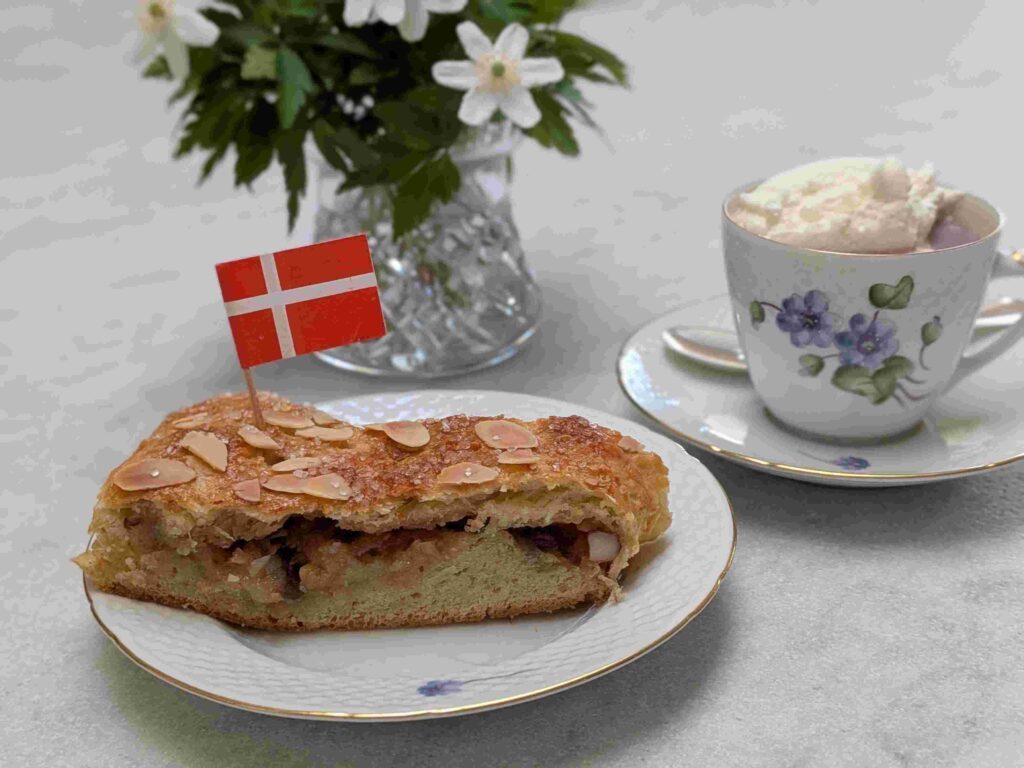
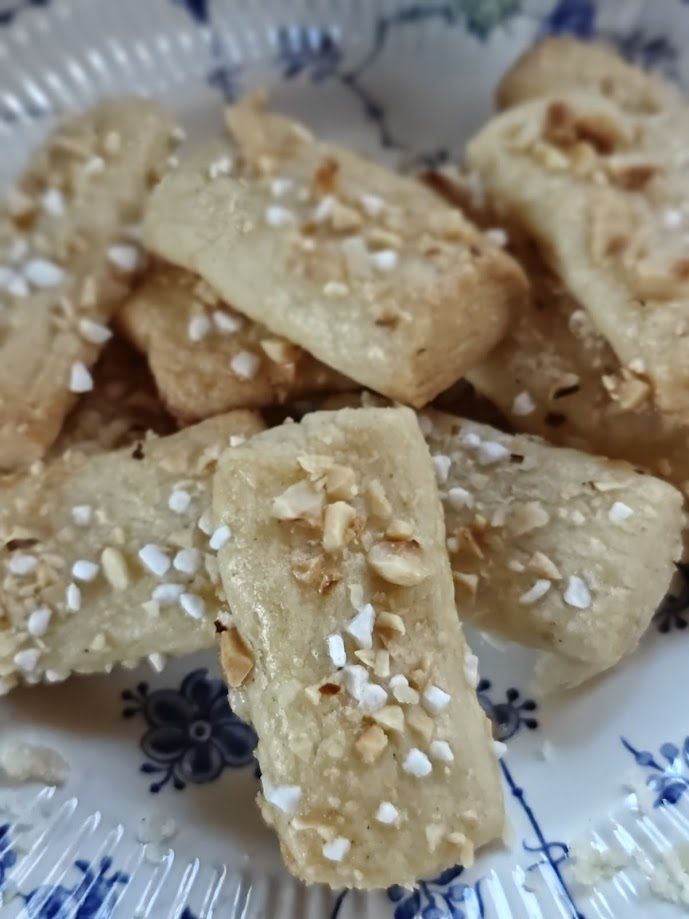
If you want to try some Danish baking at home, start with a traditional Danish kringle, or something simple like finskbrød or fedtebrød with lemon icing.

Julefrokost: the long Danish Christmas lunch
Alongside the family dinner on Christmas Eve, many Danes enjoy a julefrokost (Christmas lunch) in the weeks before Christmas, with friends, family or colleagues. This is a long, lively affair that can last for hours. It’s served in courses, usually starting with pickled herring, then cold meats and liver pâté, then hot dishes like roast pork and meatballs, and finally cheese and something sweet, with rye bread, beer and a little schnapps along the way. It’s more of a party than a quiet family meal.
Sweden: Lucia, julbord and Donald Duck
Swedish Christmas starts on 13 December with Lucia, the festival of light. Children dress in white, wear candle crowns (battery ones are popular now) and walk in procession singing, and everyone eats lussekatter, golden saffron buns with raisins. The big Christmas meal is the julbord, a lavish Christmas buffet with ham, meatballs, herring, salmon and lots of side dishes. And on Christmas Eve at 3pm, much of Sweden gathers to watch the same Donald Duck Christmas cartoon on TV, as they have for decades!

Norway: bells, brooms and gingerbread
In Norway, church bells ring at 5pm on Christmas Eve to mark the start of Christmas. Norwegian Christmas dinner varies by region, but you’ll often find ribbe (roast pork belly), pinnekjøtt (cured lamb ribs) or lutefisk. There’s lots of gingerbread (pepperkaker), and in December julebord parties with friends and colleagues. One of the quirkier old customs is hiding all the brooms in the house on Christmas Eve, so witches can’t steal them to fly around!
Six easy ways to bring a Scandinavian Christmas home
You don’t need to do all of it. Pick one or two that suit your family and build from there:
- Light an advent candle and burn it down a little each evening in December.
- Hide an almond in a bowl of rice pudding and give the winner a small prize.
- Weave paper hearts and hang them on the tree, filled with sweets.
- Put out a bowl of porridge for the nisse on Christmas Eve.
- Walk round the tree holding hands and singing a carol before opening presents.
- Bake something Danish, such as kringle, finskbrød or a batch of vanilla rings.

Shop a Scandinavian Christmas
Here are a few of our favourite things to help you get started:

£12.95

£5.49

£4.99
£7.95

£4.49

£8.95

£6.49

£3.95
Scandinavian Christmas traditions FAQs
When do Danes celebrate Christmas?
The main celebration is on the evening of 24 December (Christmas Eve), when families eat dinner, walk around the tree singing carols and open presents.
What is risalamande?
It’s the traditional Danish Christmas dessert: cold rice pudding with whipped cream and chopped almonds, served with warm cherry sauce. A whole almond is hidden in it and the finder wins a small prize.
What is a nisse?
A nisse is a small household gnome in Danish and Norwegian folklore (a tomte in Sweden). Families traditionally leave him a bowl of rice porridge with butter on Christmas Eve.
What do Scandinavians put on their Christmas tree?
Traditional decorations include woven paper hearts, paper stars, small flags, straw ornaments, nisse figures and glass baubles, often with warm white lights or candles.
What is lillejuleaften?
It’s Danish for “little Christmas Eve”, 23 December, the day many families decorate the tree and get everything ready.
Who brings the presents in Denmark?
Julemanden, the Danish Santa, who is traditionally said to live in Greenland. Some families also say the nisse helps out.
Find more Scandinavian Christmas ideas
For more inspiration, read our guide to Scandi Christmas decorations and our Scandinavian Christmas gift guide, or browse the Scandi Christmas Shop. UK delivery is free over £30.